Tugu Jogja
Tugu Jogja Travel Guide: Hidden Gems, History & Best Photo Spots
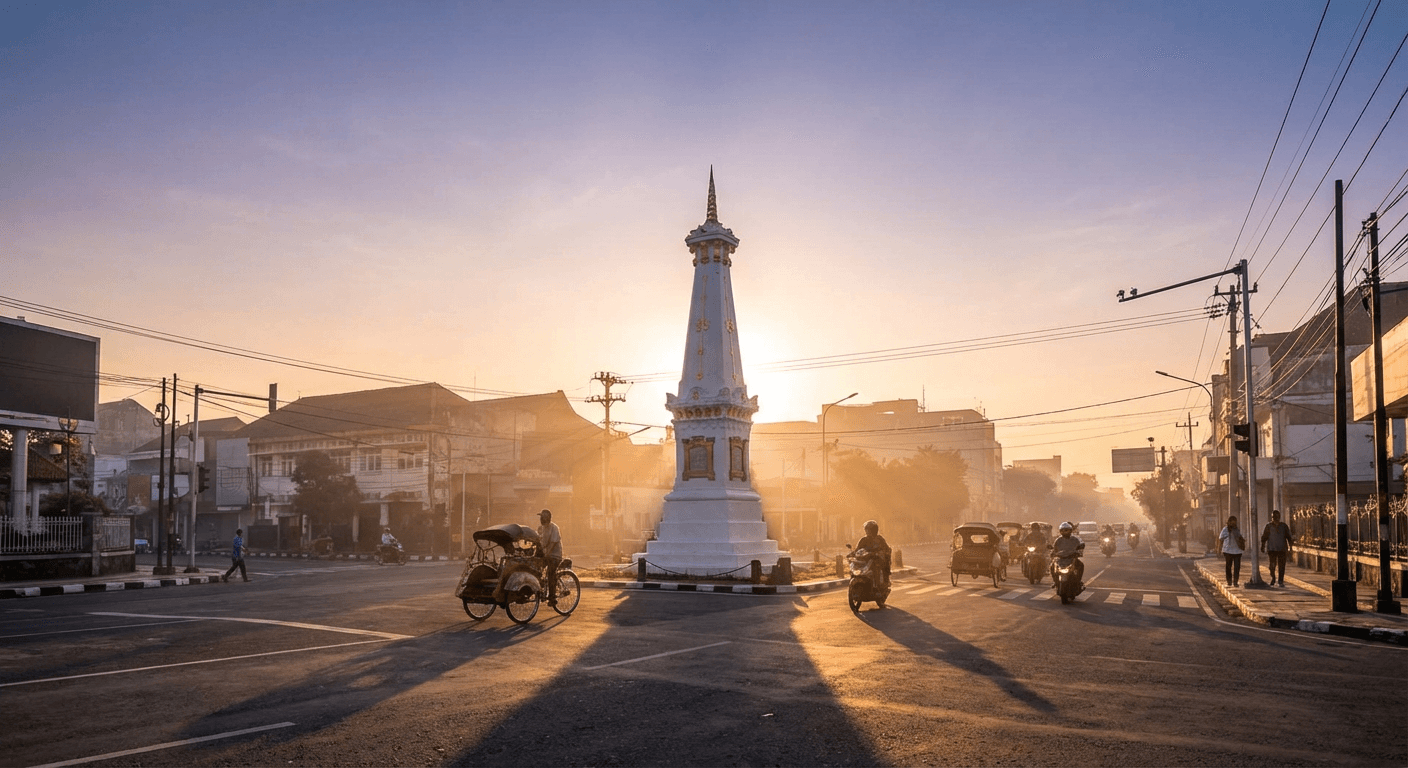
If you type "things to do in Yogyakarta" into your search bar, one image dominates the results: a white, gold-tipped monument standing stoically in the middle of a chaotic intersection. This is Tugu Jogja (also known as Tugu Pal Putih). For the average tourist, it is a compulsory checklist item—a place to dodge traffic for a split second to snap a photo before rushing to Malioboro.
But here at Itinara, we believe travel is about uncovering the soul of a place, not just skimming its surface.
To treat Tugu Jogja merely as a traffic island is to miss the heartbeat of this ancient city. This monument isn't just concrete; it is the spiritual anchor of Java and the center of the Philosophical Axis of Yogyakarta. Today, we are taking you beyond the selfie crowds to discover the hidden gems, culinary secrets, and deep history surrounding Yogyakarta’s most iconic landmark.
The Philosophical Axis: Where Earth Meets Sky
Before you step out onto the pavement, you need to understand where you are standing. You are on the Philosophical Axis (Sumbu Filosofi), an imaginary line that holds immense cultural significance.
In Javanese cosmology, this axis connects the volatile fury of Mount Merapi in the north, passes through the Tugu Monument, pierces the Keraton (Sultan's Palace), and ends at the mystical South Sea (Parangtritis) in the south.
When you look at Tugu Jogja, you are witnessing the physical representation of Manunggaling Kawula Gusti—a concept symbolizing the balance between nature, humanity, and the divine. Suddenly, that busy intersection feels a little more sacred, doesn’t it?
An Insider’s History: The Shape of Resilience
Here is a detail that will set you apart from other tourists. The sharp, pointed top you see today is actually a "modern" design. Originally, the monument was a cylinder topped with a perfect sphere, known as Golong-Gilig. This shape symbolized the unity of the people’s will (Golong) and their unbreakable determination (Gilig).
However, a devastating earthquake in 1867 shattered the original structure. When it was rebuilt, the design changed, but the spirit remained. Knowing this adds depth to your visit; you are looking at a symbol of resilience that has defined the Yogya people for centuries.
Where to Get the Best View of Tugu Jogja (Safely)
Let’s be honest: getting that perfect shot at street level can be harrowing. The traffic in Jogja is notorious, and standing in the middle of the road is dangerous.
For the best view of Tugu Jogja—and a moment of tranquility—we recommend heading to Kebon Ndalem Coffee & Eatery.
Located directly adjacent to the intersection, this cafe offers a sanctuary from the exhaust fumes. The insider tip here is to head straight for the balcony. From this elevated vantage point, you get a stunning, safe, eye-level view of the monument. It is the perfect spot to set up your camera for a timelapse video. Order a cold brew, sit back, and watch the city flow around the white pillar like water around a stone.
The "Hidden" Food Court: Pasar Kranggan
Once you have paid your respects to the monument, skip the overpriced tourist traps. Instead, walk just 300 meters west to Pasar Kranggan.
From the outside, it looks like a standard traditional market. But climb the stairs to the second floor, and you will find yourself in a trendy culinary hub. This is where local youth and foodies congregate. The vibe is retro-industrial, the prices are local, and the food is spectacular.
Must-Try Stalls at Pasar Kranggan:
- Kedai Terang Bintang: Famous for creamy, savory Udon and sweet Roti Srikaya (toast). If you see a queue, join it—it moves fast.
- TFP Kopi Warung: One of Jogja’s best-kept secrets. They serve Western dishes that rival high-end restaurants—think perfectly plated pastas and pancakes—at street-food prices.
- Depot Sintaka: The go-to spot for authentic local flavors that taste like home cooking.
- Bake Me To The Moon: Finish your food tour here with excellent pastries that prove you don't need a fancy bakery storefront for top-tier desserts.
The Authentic Night Experience: Kopi Joss
You haven't truly experienced the nightlife in Yogyakarta until you have sat on a woven mat (lesehan) on the sidewalk, sipping a glass of bubbling, charcoal-infused coffee. This is Kopi Joss.
The preparation is theatrical. The barista takes a piece of piping hot red charcoal from the fire and plunges it directly into your glass of black coffee. JOSS! The liquid hisses and boils instantly. Locals believe the charcoal neutralizes the acidity of the coffee, making it smoother on the stomach.
Where to find the best Kopi Joss near Tugu:
- Angkringan Kopi Joss Lik Man: Located just north of Tugu Station. Lik Man is the legendary pioneer of this style.
- Angkringan Kopi Joss Pak Agus: A fantastic alternative if Lik Man is too crowded.
- Angkringan Pak Tris: Known for friendly service and the same authentic, smoky flavor profile.
Best Time to Visit Tugu Jogja
Timing is everything. The personality of the intersection changes drastically depending on the hour.
- The Golden Hour (Sunrise 5:30 AM - 6:30 AM): This is the Itinara recommendation. The air is cool, and the streets are relatively empty, allowing you to actually stand near the monument for photos without blocking traffic. The soft morning light hits the white stone perfectly.
- The Night Owl Shift (11:00 PM onwards): The city never sleeps here. The monument is floodlit, creating a dramatic contrast against the dark sky, and the angkringan street food scene is at its liveliest.
- When to Avoid (5:00 PM - 8:00 PM): Sunset is rush hour. The noise and pollution make it unpleasant, and getting a clear photo is nearly impossible due to gridlock.
Final Thoughts
Tugu Jogja is more than a waypoint; it is a storyteller. It tells tales of sultans and spirits, of earthquakes and resilience, and of modern culinary reinvention. So, the next time you find yourself in Yogyakarta, don't just snap the picture and run. Walk the axis, explore Pasar Kranggan, and listen to the hiss of the charcoal.
Ready to experience the magic of Java? Pack your bags and let Itinara guide you to your next adventure.
Meta Description:
Discover the real Tugu Jogja beyond the photos. Explore hidden food gems at Pasar Kranggan, the best Kopi Joss spots, and the history of Yogyakarta's spiritual heart.
Share this Article