Legend Tales : History of Prambanan and Ratu Boko Temple
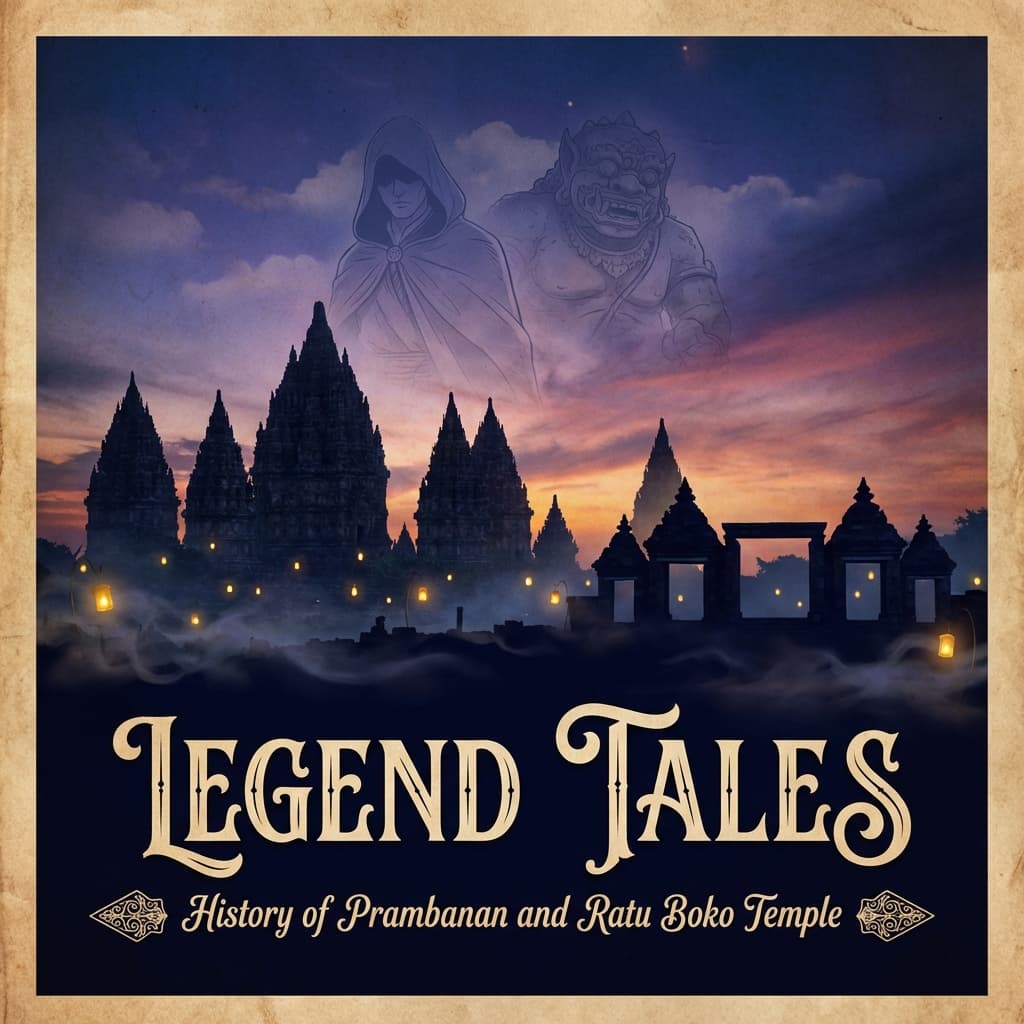
Beyond the Stone Giants: A Deep Dive into Prambanan & Ratu Boko
Uncover the tragic love story of Roro Jonggrang, the curse of the thousand temples, and the best time to visit Prambanan and Ratu Boko for an unforgettable sunset.
Welcome back to Itinara! Today, we are traveling back to the 9th century in Java, Indonesia. While guidebooks often recite dry facts about the Rakai Pikatan dynasty, the true magic of the Prambanan Temple compounds and the fortress of Ratu Boko lies in their local soul. To the Javanese people, these aren't just piles of stone; they are the petrified remains of a divine heartbreak.
If you are looking for the history of Prambanan and Ratu Boko, you must first understand the legends of love, curses, and giants that define them. Let's explore the stories that stone cannot tell.
The Legends: Love, Curse, and Giants
Prambanan: The Tale of the Slender Virgin
The central legend of Prambanan revolves around Roro Jonggrang (The Slender Virgin). As the story goes, a powerful man named Bandung Bondowoso fell in love with her. However, there was a dark complication: Bondowoso had killed her father, King Boko, in battle.
To reject him without incurring his wrath, the princess set an impossible task: she agreed to marry him only if he could build 1,000 temples in a single night. Bondowoso, commanding an army of spirits, nearly succeeded. By 4:00 AM, 999 temples stood tall.
Desperate, Roro Jonggrang tricked the spirits by ordering village women to burn straw and pound rice in the east, simulating sunrise. The spirits fled. Enraged by her deception, Bondowoso cursed her to become the final stone to complete the count. Today, the Durga Mahisasuramardini statue in the main Shiva temple is said to be the petrified princess herself.
Ratu Boko: The Giant’s Palace
Just 3km away lies Ratu Boko. Unlike the spires of Prambanan, this is a fortified plateau. In folklore, this was the stronghold of King Boko, the father of Roro Jonggrang, who was rumored to be a man-eating giant.
The site feels more human than divine. The "pools" you see were likely bathing places for the royal family. It offers a rare glimpse into the domestic life of ancient Javanese royalty—or giants, if you believe the tales.
Itinara Insider Detail: When visiting Ratu Boko, look closely at the "Kala" (monster head) carvings above the gates. Unlike the menacing faces at Prambanan meant to ward off evil, some at Boko have softer, almost smiling features—a detail often missed by hasty tourists.
Authentic "Hidden Gems" (Skip the Crowds)
Most tourists stick to the main Shiva temple. To truly optimize your trip, you need to visit the spots that 90% of visitors ignore.
- Candi Sewu (The "Thousand" Temples): Located within the Prambanan park (near the rear exit), this massive complex is actually older than Prambanan. It is Buddhist, highlighting the region's religious harmony. It is atmospheric, grand, and usually empty—perfect for photography.
- Candi Plaosan (The Love Temple): A 5-minute drive east, this temple was built by a Hindu king for his Buddhist queen. Insider Tip: Visit at sunrise. The twin temples sitting among lush rice paddies with Mount Merapi in the background offer the best view in the region.
Logistics & Insider Tips: Best Time to Visit
Planning is key to avoiding the heat and the crowds. Here is how to structure your itinerary for the perfect "Golden Hour" experience.
The Shuttle Secret
Don’t hire a separate driver for the hop between sites. Buy the Prambanan & Ratu Boko Combo Ticket (approx. $45 USD for foreigners). It includes a free shuttle bus that runs every 15–30 minutes. It's the most efficient way to travel.
The Golden Itinerary
- 3:00 PM: Enter Prambanan. Explore the main grounds.
- 4:00 PM: Walk north to Candi Sewu to hear the wind whistle through the stupas.
- 4:30 PM: Take the shuttle to Ratu Boko.
- 5:15 PM: Position yourself at the Ratu Boko Main Gate. Standing slightly downhill gives you the iconic silhouette against the orange sky.
Authentic Dining: Where to Eat
Avoid the overpriced tourist buffets inside the complex. For a real taste of Java:
Wedang Kopi Prambanan: (5 mins away) A classic Javanese joglo offering authentic prasmanan (buffet-style) village food. Their sayur lodeh (vegetable coconut curry) is a must-try.
Abhayagiri Restaurant: (Near Ratu Boko) If you want a "Royal Heritage" dinner, come here. It offers the single best view of Prambanan lit up at night with Merapi in the background.
Authentic Experience Checklist
- [ ] Find the "cursed princess" statue (Durga) in the Shiva temple.
- [ ] Walk the 15 minutes north to Candi Sewu for a quiet Buddhist experience.
- [ ] Watch the sunset through the Main Gate of Ratu Boko.
- [ ] Try Wedang Uwuh (a local clove & ginger drink) at a nearby warung.
Exploring the history of Prambanan and Ratu Boko is about more than just sightseeing; it's about stepping into a legend that is still alive in the hearts of the locals. Enjoy the journey!
Share this Article