Legend of sate klathak in yogyakarta
The Legend of Sate Klathak in Yogyakarta: Bicycle Spokes and Sea Salt
By Itinara Travel Expert | Your Ultimate Yogyakarta Food Guide
As the tropical sun dips below the horizon in Yogyakarta, a different kind of heat begins to rise in the southern district of Bantul. It’s not the humid warmth of the Javanese day, but the intense, crackling glow of charcoal embers. If you follow your nose—past the ancient temples and the bustling city center—you’ll find yourself in the Jejeran area of Pleret. Here, the air is thick with a scent that has defined the region for nearly a century: the primal, mouth-watering aroma of roasting goat meat.
This isn't your typical Indonesian satay. When searching for the best things to do in Yogyakarta, a culinary pilgrimage to try Sate Klathak is essential. Forget the thick peanut sauces and the sweet soy glazes you find on the street corners of Jakarta or Bali. We are talking about a must-try food in Yogyakarta that is as much a feat of engineering and local legend as it is a culinary masterpiece.
The Legend of Sate Klathak: A Legacy in Salt
The legend of Sate Klathak in Yogyakarta begins with a man named Mbah Ambyah (born Hamzah). In the 1930s-1940s, long before Yogyakarta became the bustling tourist hub it is today, Mbah Ambyah began selling goat satay in the Jejeran area of Bantul. He was a man of simplicity, and his recipe reflected that. He realized that the highest quality young goat meat (kambing muda) didn't need to be hidden behind complex spices; it needed to be celebrated with just a touch of sea salt.
But where did the name "Klathak" come from? Local lore offers two enchanting theories:
- The Sound: As Mbah Ambyah tossed coarse sea salt onto the open flames, the salt would pop and crackle—a sound the locals transcribed as "klathak-klathak."
- The Melinjo Seeds: Early accounts suggest Mbah Ambyah would roast melinjo seeds (known locally as klathak) alongside the meat, the seeds themselves popping in the heat of the fire.
The Engineering of Flavor: Why Bicycle Spokes?
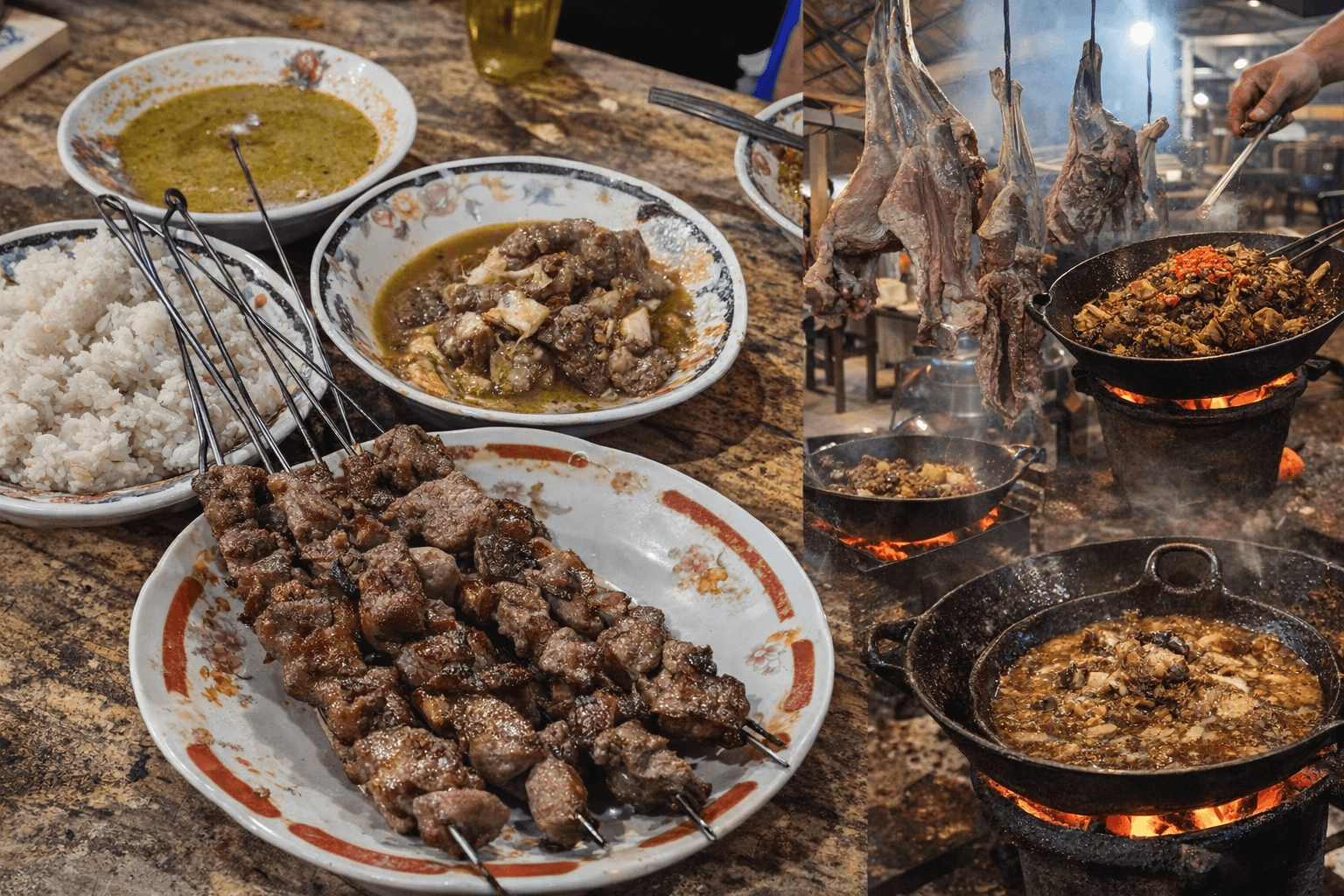
If you look closely at the grill of a Sate Klathak master, you’ll notice something startling. There are no bamboo skewers here. Instead, the meat is threaded onto iron bicycle spokes (ruji sepeda). This isn’t just a quirky aesthetic choice; it’s a brilliant piece of traditional kitchen physics and one of the most unique culinary experiences in Indonesia.
Iron is a superior conductor of heat. While a bamboo skewer only heats the meat from the outside, the iron spoke heats up and cooks the meat from the inside out simultaneously. This ensures that the large chunks of goat meat remain incredibly juicy and tender on the inside while achieving a perfectly charred, salty crust on the outside.
Itinara Insider Tip: The "Secret" Menu Items
To eat like a local, don’t just order the satay. Enhance your feast with these authentic sides:
- Kronyos: Deep-fried goat fat that is dangerously crispy and bursts with savory flavor.
- Kicik: A sweet and savory stir-fry of tender goat meat—a perfect balance to the salty satay.
- Tengkleng: A spicy, thin soup made from goat bones and offal. It’s a ritual to pick the succulent marrow and meat from the bone.
Hidden Spots: Where to Find the Best Sate Klathak in Yogyakarta
While the city center of Jogja offers many modern takes, true seekers of flavor must head south to the Jalan Imogiri Timur corridor. This is the "Silicon Valley" of Sate Klathak. Here are the hidden spots in Yogyakarta preferred by locals:
1. Sate Klathak Pak Bari (Pasar Wonokromo)
Located inside a traditional market, this stall gained international fame after being featured in the film AADC 2. Despite its popularity, it retains a "hidden gem" feel. Eating lesehan (on floor mats) amidst quiet market stalls at night is one of the most authentic things to do in Bantul.
2. Sate Klathak Pak Jupaini
A favorite for those seeking a shorter wait time and a taste profile that stays true to the original Mbah Ambyah recipe. The meat is consistently tender and served with a rich, fragrant Gulai (yellow curry broth).
3. Sate Klathak Mbah Momo & Mak Adi
Mbah Momo offers a homey, family-oriented atmosphere on Jl. Imogiri Barat. Meanwhile, Sate Klathak Mak Adi is famous for its unique gravy pairing, offering a slightly thicker broth that is perfect for dipping.
Logistics: Best Time to Visit and Insider Tips
Best Time to Visit: For the most authentic experience, arrive after 8:00 PM. The night air in Bantul is cooler, and the atmosphere of the roadside stalls is electric.
The Ritual: When your plate arrives, you won't see peanut sauce. Instead, use the Gulai broth. Take a piece of meat from the bicycle spoke, dip it into the gulai, and follow it with a spoonful of steamed rice. The combination of smoky, salty meat and aromatic broth is a masterclass in Javanese culinary simplicity.
Plan Your Yogyakarta Culinary Adventure
From the legend of Sate Klathak to the majestic Borobudur, Yogyakarta is a traveler's dream. Let us help you find the best hidden gems.
EXPLORE JOGJA DEALS WITH ITINARAMeta Description: Discover the legend of Sate Klathak in Yogyakarta. Learn why this authentic goat satay uses bicycle spokes and sea salt, plus the best hidden spots in Bantul to visit for a true culinary experience.
Share this Article